HashClash was a volunteer computing project running on the Berkeley Open Infrastructure for Network Computing (BOINC) software platform to find collisions in the MD5 hash algorithm. It was based at Department of Mathematics and Computer Science at the Eindhoven University of Technology, and Marc Stevens initiated the project as part of his master's degree thesis. The project ended after Stevens defended his M.Sc. thesis in June 2007. However, SHA1 was added later, and the code repository was ported to git in 2017. The project was used to create a rogue certificate authority certificate in 2009.
Representation collapse
Representation collapse is a phenomenon in machine learning and representation learning where a model maps different inputs to the same or very similar embeddings, which means it loses important information about how the data is spread out. It is frequently encountered in self-supervised learning, especially within contrastive and non-contrastive frameworks, when training objectives or model architectures do not maintain variance across representations. Collapse results in degenerate solutions characterized by uninformative learned features, significantly impairing downstream task performance. Various techniques have been proposed to mitigate representation collapse, including the use of negative samples, architectural asymmetry, stop-gradient operations, variance regularization, and redundancy reduction objectives, as seen in methods such as SimCLR, BYOL, and VICReg. Comprehending and averting representation collapse is regarded as a fundamental challenge in the advancement of stable and efficient self-supervised learning systems.
Exposure Notification
The (Google/Apple) Exposure Notification System (GAEN) is a framework and protocol specification developed by Apple Inc. and Google to facilitate digital contact tracing during the COVID-19 pandemic. When used by health authorities, it augments more traditional contact tracing techniques by automatically logging close approaches among notification system users using Android or iOS smartphones. Exposure Notification is a decentralized reporting protocol built on a combination of Bluetooth Low Energy technology and privacy-preserving cryptography. It is an opt-in feature within COVID-19 apps developed and published by authorized health authorities. Unveiled on April 10, 2020, it was made available on iOS on May 20, 2020, as part of the iOS 13.5 update and on December 14, 2020, as part of the iOS 12.5 update for older iPhones. On Android, it was added to devices via a Google Play Services update, supporting all versions since Android Marshmallow. The Apple/Google protocol is similar to the Decentralized Privacy-Preserving Proximity Tracing (DP-3T) protocol created by the European DP-3T consortium and the Temporary Contact Number (TCN) protocol by Covid Watch, but is implemented at the operating system level, which allows for more efficient operation as a background process. Since May 2020, a variant of the DP-3T protocol is supported by the Exposure Notification Interface. Other protocols are constrained in operation because they are not privileged over normal apps. This leads to issues, particularly on iOS devices where digital contact tracing apps running in the background experience significantly degraded performance. The joint approach is also designed to maintain interoperability between Android and iOS devices, which constitute nearly all of the market. The ACLU stated the approach "appears to mitigate the worst privacy and centralization risks, but there is still room for improvement". In late April, Google and Apple shifted the emphasis of the naming of the system, describing it as an "exposure notification service", rather than "contact tracing" system. == Technical specification == Digital contact tracing protocols typically have two major responsibilities: encounter logging and infection reporting. Exposure Notification only involves encounter logging which is a decentralized architecture. The majority of infection reporting is centralized in individual app implementations. To handle encounter logging, the system uses Bluetooth Low Energy to send tracking messages to nearby devices running the protocol to discover encounters with other people. The tracking messages contain unique identifiers that are encrypted with a secret daily key held by the sending device. These identifiers change every 15–20 minutes as well as Bluetooth MAC address in order to prevent tracking of clients by malicious third parties through observing static identifiers over time. The sender's daily encryption keys are generated using a random number generator. Devices record received messages, retaining them locally for 14 days. If a user tests positive for infection, the last 14 days of their daily encryption keys can be uploaded to a central server, where it is then broadcast to all devices on the network. The method through which daily encryption keys are transmitted to the central server and broadcast is defined by individual app developers. The Google-developed reference implementation calls for a health official to request a one-time verification code (VC) from a verification server, which the user enters into the encounter logging app. This causes the app to obtain a cryptographically signed certificate, which is used to authorize the submission of keys to the central reporting server. The received keys are then provided to the protocol, where each client individually searches for matches in their local encounter history. If a match meeting certain risk parameters is found, the app notifies the user of potential exposure to the infection. Google and Apple intend to use the received signal strength (RSSI) of the beacon messages as a source to infer proximity. RSSI and other signal metadata will also be encrypted to resist deanonymization attacks. === Version 1.0 === To generate encounter identifiers, first a persistent 32-byte private Tracing Key ( t k {\displaystyle tk} ) is generated by a client. From this a 16 byte Daily Tracing Key is derived using the algorithm d t k i = H K D F ( t k , N U L L , 'CT-DTK' | | D i , 16 ) {\displaystyle dtk_{i}=HKDF(tk,NULL,{\text{'CT-DTK'}}||D_{i},16)} , where H K D F ( Key, Salt, Data, OutputLength ) {\displaystyle HKDF({\text{Key, Salt, Data, OutputLength}})} is a HKDF function using SHA-256, and D i {\displaystyle D_{i}} is the day number for the 24-hour window the broadcast is in starting from Unix Epoch Time. These generated keys are later sent to the central reporting server should a user become infected. From the daily tracing key a 16-byte temporary Rolling Proximity Identifier is generated every 10 minutes with the algorithm R P I i , j = Truncate ( H M A C ( d t k i , 'CT-RPI' | | T I N j ) , 16 ) {\displaystyle RPI_{i,j}={\text{Truncate}}(HMAC(dtk_{i},{\text{'CT-RPI'}}||TIN_{j}),16)} , where H M A C ( Key, Data ) {\displaystyle HMAC({\text{Key, Data}})} is a HMAC function using SHA-256, and T I N j {\displaystyle TIN_{j}} is the time interval number, representing a unique index for every 10 minute period in a 24-hour day. The Truncate function returns the first 16 bytes of the HMAC value. When two clients come within proximity of each other they exchange and locally store the current R P I i , j {\displaystyle RPI_{i,j}} as the encounter identifier. Once a registered health authority has confirmed the infection of a user, the user's Daily Tracing Key for the past 14 days is uploaded to the central reporting server. Clients then download this report and individually recalculate every Rolling Proximity Identifier used in the report period, matching it against the user's local encounter log. If a matching entry is found, then contact has been established and the app presents a notification to the user warning them of potential infection. === Version 1.1 === Unlike version 1.0 of the protocol, version 1.1 does not use a persistent tracing key, rather every day a new random 16-byte Temporary Exposure Key ( t e k i {\displaystyle tek_{i}} ) is generated. This is analogous to the daily tracing key from version 1.0. Here i {\displaystyle i} denotes the time is discretized in 10 minute intervals starting from Unix Epoch Time. From this two 128-bit keys are calculated, the Rolling Proximity Identifier Key ( R P I K i {\displaystyle RPIK_{i}} ) and the Associated Encrypted Metadata Key ( A E M K i {\displaystyle AEMK_{i}} ). R P I K i {\displaystyle RPIK_{i}} is calculated with the algorithm R P I K i = H K D F ( t e k i , N U L L , 'EN-RPIK' , 16 ) {\displaystyle RPIK_{i}=HKDF(tek_{i},NULL,{\text{'EN-RPIK'}},16)} , and A E M K i {\displaystyle AEMK_{i}} using the algorithm A E M K i = H K D F ( t e k i , N U L L , 'EN-AEMK' , 16 ) {\displaystyle AEMK_{i}=HKDF(tek_{i},NULL,{\text{'EN-AEMK'}},16)} . From these values a temporary Rolling Proximity Identifier ( R P I i , j {\displaystyle RPI_{i,j}} ) is generated every time the BLE MAC address changes, roughly every 15–20 minutes. The following algorithm is used: R P I i , j = A E S 128 ( R P I K i , 'EN-RPI' | | 0 x 000000000000 | | E N I N j ) {\displaystyle RPI_{i,j}=AES128(RPIK_{i},{\text{'EN-RPI'}}||{\mathtt {0x000000000000}}||ENIN_{j})} , where A E S 128 ( Key, Data ) {\displaystyle AES128({\text{Key, Data}})} is an AES cryptography function with a 128-bit key, the data is one 16-byte block, j {\displaystyle j} denotes the Unix Epoch Time at the moment the roll occurs, and E N I N j {\displaystyle ENIN_{j}} is the corresponding 10-minute interval number. Next, additional Associated Encrypted Metadata is encrypted. What the metadata represents is not specified, likely to allow the later expansion of the protocol. The following algorithm is used: Associated Encrypted Metadata i , j = A E S 128 _ C T R ( A E M K i , R P I i , j , Metadata ) {\displaystyle {\text{Associated Encrypted Metadata}}_{i,j}=AES128\_CTR(AEMK_{i},RPI_{i,j},{\text{Metadata}})} , where A E S 128 _ C T R ( Key, IV, Data ) {\displaystyle AES128\_CTR({\text{Key, IV, Data}})} denotes AES encryption with a 128-bit key in CTR mode. The Rolling Proximity Identifier and the Associated Encrypted Metadata are then combined and broadcast using BLE. Clients exchange and log these payloads. Once a registered health authority has confirmed the infection of a user, the user's Temporary Exposure Keys t e k i {\displaystyle tek_{i}} and their respective interval numbers i {\displaystyle i} for the past 14 days are uploaded to the central reporting server. Clients then download this report and individually recalculate every Rolling Proximity Identifier starting from interval number i {\displaystyle i} ,
Catie Cuan
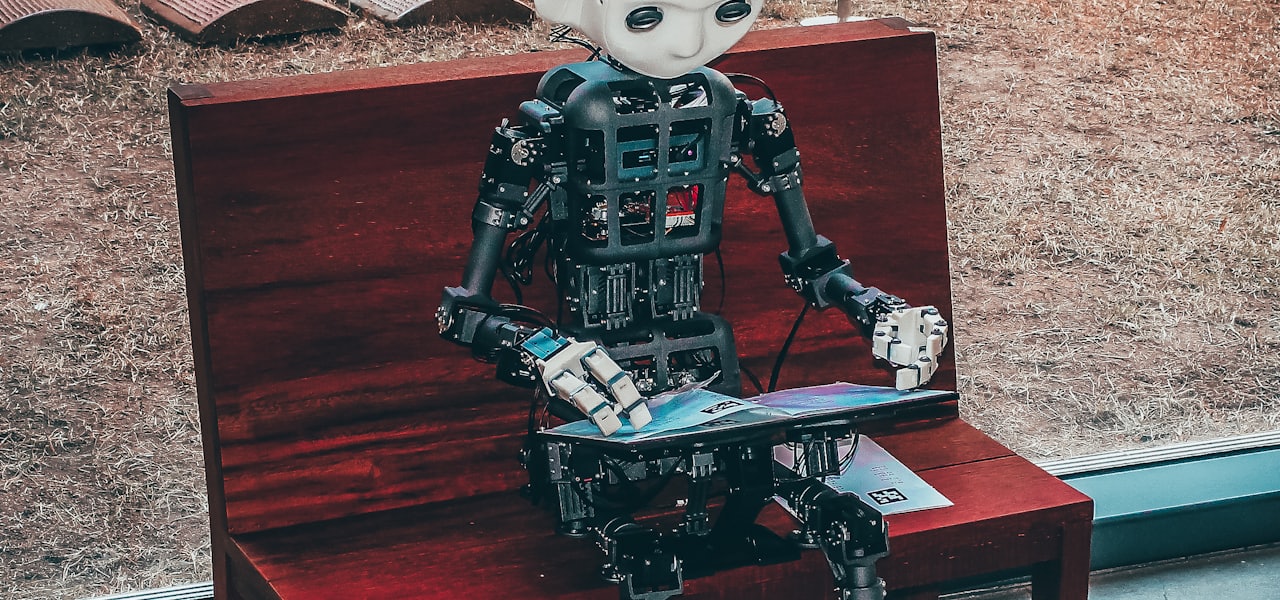
Catie Cuan is an artist, entrepeuneur, and innovator in the field of robotic art and human-robot interaction, where she specializes in choreorobotics, an emerging field at the intersection of choreographic dance and robotics. Catie Cuan is currently one of the academic researchers pioneering the field of choreorobotics and currently holds a post-doctoral fellowship at Stanford University. == Career == Catie Cuan earned a bachelor's degree from the University of California, Berkeley. She graduated with a Ph.D. from the Department of Mechanical Engineering at Stanford University, focusing in robotics. Her most cited publication is about how to improve robotic expressive systems using tools from dance theory, such as the Laban/Bartenieff Movement Analysis. In her most recent research projects, she explores a predictive model of imitation learning for robots moving around humans, a project that advances the field of social robotics. Cuan credits her work in robotics to the experience with her father when he had a stroke and was surrounded by many medical machines, which made her think about how people might feel empowered and hopeful rather than afraid. As a ballet dancer and choreographer, she has performed with the Metropolitan Opera Ballet and the Lyric Opera of Chicago. In 2020, she was the dancer and choreographer of the show Output, which was part of a collaboration with ThoughtWorks Arts and the Pratt Institute. In the production, she danced with an ABB IRB 6700 industrial robot. In 2022, she was named as an IF/THEN ambassador for the American Association for the Advancement of Science. The same year, she was appointed Futurist-in-Residence at the Smithsonian Arts and Industries Building, where she performed at the closing ceremonies of the FUTURES exhibit on July 6, 2022. Cuan has also contributed to product designs, working with IDEO and Dutch interior design firm moooi on their Piro project, which launched a dancing scent diffuser robot during Milan Design Week in June 2022. She is a TED speaker with talks about how to teach robots to dance, and what is coming up for dancing robots in the AI era.
Agent-assisted automation
Agent-assisted automation is a type of call center technology that automates elements of what the call center agent 1) does with his/her desktop tools and/or 2) says to customers during the call using pre-recorded audio. It is a relatively new category of call center technology that shows promise in improving call center productivity and compliance. == Types of agent-assisted automation == === Pre-recorded audio === Pre-recorded audio (sometimes referred to as soundboard (computer program) or as soundboard technology) is another form of agent-assisted automation. The purpose of using pre-recorded messages is to increase the probability (and in some cases error-proof the process so) that the right information is provided to customers at the right time. The required disclosures are pre-recorded to ensure accuracy and understandability. By integrating the recordings with the customer relationship management software, the right combination of disclosures can be played based on the combination of goods and services the customer purchased. The integration with the customer relationship management software also ensures that the order cannot be submitted until the disclosures are played, essentially error-proofing (poka-yoke) the process of ensuring the customer gets all the required consumer protection information. Phone surveys are ideal applications of this technology. Whether surveying market preferences or political views, the pre-recorded audio with an agent listening allows the questions to be asked in the same way every time, uninfluenced by the agents' fatigue levels, accents, or their own views. === Fraud prevention === Fraud prevention is a specialized type of agent-assisted automation focused on reducing ID theft and credit card fraud. ID theft and credit card fraud are huge threats for call centers and their customers and few good solutions exist, but new agent-assisted automation solutions are producing promising results. The technology allows the agents to remain on the phone while the customers use their phone key pads to enter the information. The tones are masked and the information passes directly into the customer relationship management system or payment gateway in the case of credit card transactions. The automation essentially makes it impossible for call center agents and also call center personnel that might be monitoring the calls to steal the credit card number, social security number, or other personally identifiable information. === Outbound telemarketing === Another specialized application space of agent-assisted automation is in outbound telemarketing, which goes under numerous headings including outbound prospecting, cold calling, solicitation, fund-raising, etc. Turnover is high among agents engaged in this kind of work because the task is tedious and emotionally difficult. It is tedious because the agent spends the bulk of their day, not talking to qualified leads, but in getting wrong numbers and answering machines. == Benefits == Just as automation has benefited manufacturing by reducing the mental and physical effort required of workers while simultaneously improving throughput, quality, and safety, agent-assisted automation is improving call center results while reducing the tiring aspects of the job for agents. In some cases, the agent-assisted automation streamlines the process and allows calls to be handled more quickly. By eliminating cutting and pasting from one application to another, by auto-navigating applications, and by providing a single view of the customer, agent-assisted automation can reduce call handle time and increase agent productivity. Second, in theory, the more steps that can be automated and the more logic that can be built into the call flow (e.g., if the customer buys items 2 and 9, then disclosures a, c, and f are read by the pre-recorded audio), then companies may be able to reduce the amount of training that is required of the agents while at the same time ensuring more consistency and accuracy. However, no published studies have reported this result yet. But an even larger problem in call centers is between-agent variation in behavior and results. Agents differ in the amount of training and coaching they receive, they differ in the amount of experience they have, their jobs are repetitious and tiring, and the process and procedures the agents are supposed to follow constantly change. Moreover, there are significant individual differences between agents in their intelligence, personality, motivations, etc. which all affect performance. Despite the large amount of money call centers have spent over decades trying to reduce between-agent variation, the problem is still so prevalent that one large study of customer interactions with call centers found that a customer's experience was completely a function of the quality of the agent who happened to answer the phone. Therefore, the most significant benefit of agent-assisted automation may prove to be in how the automation error-proofs or poka-yoke the process and ensures that something that needs to be done or said happens every time. Properly implemented, the between-agent variation for whatever step of the process the automation is applied to may be able to be reduced to near zero. This is especially important in a collection agency whose processes and procedures are closely regulated by the Fair Debt Collection Practices Act.
ZygoteBody
ZygoteBody, formerly Google Body, is a web application by Zygote Media Group that renders manipulable 3D anatomical models of the human body. Several layers, from muscle tissues down to blood vessels, can be removed or made transparent to allow better study of individual body parts. Most of the body parts are labelled and are searchable. == Technology == The human models are based on data from the Zygote Media Group. The website uses JavaScript and WebGL technology to display 3D images inside the web browser without requiring the installation of external browser plug-ins. == History == ZygoteBody was launched as Google Body on December 15, 2010. On April Fools' Day 2011, users were greeted with the anatomy of a cow on the home page. The cow model is still available as part of the open-3d-viewer open source project. As part of the wind down on Google Labs, it was announced that Google Body will be shut down but will continue to be maintained by Zygote as ZygoteBody. On October 13, 2011, the Google Body site was shut down. Then, on January 9, 2012, ZygoteBody was launched and core code base (with the Google Cow model as a demo) was made available as an open source project called open-3d-viewer.
Level-set method
The Level-set method (LSM) is a conceptual framework for using level sets as a tool for numerical analysis of surfaces and shapes. LSM can perform numerical computations involving curves and surfaces on a fixed Cartesian grid without having to parameterize these objects. LSM makes it easier to perform computations on shapes with sharp corners and shapes that change topology (such as by splitting in two or developing holes). These characteristics make LSM effective for modeling objects that vary in time, such as an airbag inflating or a drop of oil floating in water. == Overview == The figure on the right illustrates several ideas about LSM. In the upper left corner is a bounded region with a well-behaved boundary. Below it, the red surface is the graph of a level set function φ {\displaystyle \varphi } determining this shape, and the flat blue region represents the X-Y plane. The boundary of the shape is then the zero-level set of φ {\displaystyle \varphi } , while the shape itself is the set of points in the plane for which φ {\displaystyle \varphi } is positive (interior of the shape) or zero (at the boundary). In the top row, the shape's topology changes as it is split in two. It is challenging to describe this transformation numerically by parameterizing the boundary of the shape and following its evolution. An algorithm can be used to detect the moment the shape splits in two and then construct parameterizations for the two newly obtained curves. On the bottom row, however, the plane at which the level set function is sampled is translated upwards, on which the shape's change in topology is described. It is less challenging to work with a shape through its level-set function rather than with itself directly, in which a method would need to consider all the possible deformations the shape might undergo. Thus, in two dimensions, the level-set method amounts to representing a closed curve Γ {\displaystyle \Gamma } (such as the shape boundary in our example) using an auxiliary function φ {\displaystyle \varphi } , called the level-set function. The curve Γ {\displaystyle \Gamma } is represented as the zero-level set of φ {\displaystyle \varphi } by Γ = { ( x , y ) ∣ φ ( x , y ) = 0 } , {\displaystyle \Gamma =\{(x,y)\mid \varphi (x,y)=0\},} and the level-set method manipulates Γ {\displaystyle \Gamma } implicitly through the function φ {\displaystyle \varphi } . This function φ {\displaystyle \varphi } is assumed to take positive values inside the region delimited by the curve Γ {\displaystyle \Gamma } and negative values outside. == The level-set equation == If the curve Γ {\displaystyle \Gamma } moves in the normal direction with a speed v {\displaystyle v} , then by chain rule and implicit differentiation, it can be determined that the level-set function φ {\displaystyle \varphi } satisfies the level-set equation ∂ φ ∂ t = v | ∇ φ | . {\displaystyle {\frac {\partial \varphi }{\partial t}}=v|\nabla \varphi |.} Here, | ⋅ | {\displaystyle |\cdot |} is the Euclidean norm (denoted customarily by single bars in partial differential equations), and t {\displaystyle t} is time. This is a partial differential equation, in particular a Hamilton–Jacobi equation, and can be solved numerically, for example, by using finite differences on a Cartesian grid. However, the numerical solution of the level set equation may require advanced techniques. Simple finite difference methods fail quickly. Upwinding methods such as the Godunov method are considered better; however, the level set method does not guarantee preservation of the volume and shape of the set level in an advection field that maintains shape and size, for example, a uniform or rotational velocity field. Instead, the shape of the level set may become distorted, and the level set may disappear over a few time steps. Therefore, high-order finite difference schemes, such as high-order essentially non-oscillatory (ENO) schemes, are often required, and even then, the feasibility of long-term simulations is questionable. More advanced methods have been developed to overcome this; for example, combinations of the leveling method with tracking marker particles suggested by the velocity field. == Example == Consider a unit circle in R 2 {\textstyle \mathbb {R} ^{2}} , shrinking in on itself at a constant rate, i.e. each point on the boundary of the circle moves along its inwards pointing normally at some fixed speed. The circle will shrink and eventually collapse down to a point. If an initial distance field is constructed (i.e. a function whose value is the signed Euclidean distance to the boundary, positive interior, negative exterior) on the initial circle, the normalized gradient of this field will be the circle normal. If the field has a constant value subtracted from it in time, the zero level (which was the initial boundary) of the new fields will also be circular and will similarly collapse to a point. This is due to this being effectively the temporal integration of the Eikonal equation with a fixed front velocity. == Applications == In mathematical modeling of combustion, LSM is used to describe the instantaneous flame surface, known as the G equation. Level-set data structures have been developed to facilitate the use of the level-set method in computer applications. Computational fluid dynamics Trajectory planning Optimization Image processing Computational biophysics Discrete complex dynamics (visualization of the parameter plane and the dynamic plane) == History == The level-set method was developed in 1979 by Alain Dervieux, and subsequently popularized by Stanley Osher and James Sethian. It has since become popular in many disciplines, such as image processing, computer graphics, computational geometry, optimization, computational fluid dynamics, and computational biology.